330.484.5888
 Canton, OH
 330.484.5888
 Canton, OH


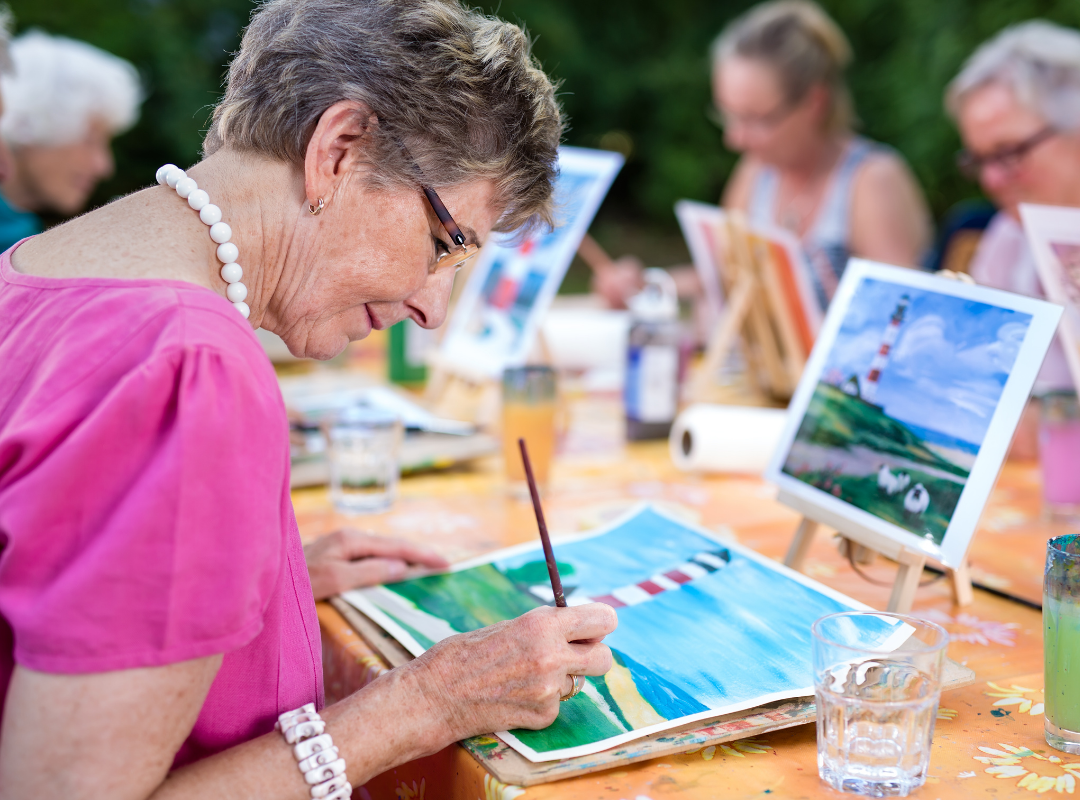
Art therapy for seniors uses guided creative expression to support communication, reflection, and personal well-being. Recreational art classes can also offer purpose, choice, enjoyment, and social connection, but they are not automatically art therapy. The difference depends on who leads the activity and whether it is part of a therapeutic process.
Creative work can give you something meaningful to begin, continue, and complete. It can also create a comfortable way to share ideas or spend time with others. At The Gables of Canton, art classes are part of a wider mix of social, educational, fitness, and entertainment opportunities for older adults in Canton, Ohio.
What Is Art Therapy for Seniors?
Art therapy is a mental health service that combines active art-making, the creative process, and psychological methods within a therapeutic relationship. Art therapists are trained clinicians with graduate-level education in art and therapy.
An art class has a different primary purpose. It may focus on creativity, learning, enjoyment, self-expression, or spending time with other people. These experiences may still feel calming or meaningful, but that does not make every painting session or craft project a form of therapy.
Art Therapy vs. an Art Class
Art therapy uses art as part of a guided therapeutic process led by a qualified professional. An art class focuses on creative participation, skill-building, enjoyment, or social engagement.
This difference matters when you search for senior art classes near me. Before joining, ask who leads the activity, whether it is recreational or therapeutic, and what participants can expect.
How Creative Activities Can Support Wellness and Daily Purpose
Creative activities can add choice, structure, and personal meaning to the day. A recent review of existing research found that participatory arts show potential for supporting older adults’ well-being, while also noting that differences in study quality and program types limit firm conclusions.
These benefits often appear through everyday choices, shared projects, and the satisfaction of making visible progress.
Self-Expression Beyond Words
Art gives you another way to communicate an idea, mood, memory, or preference. Color, shape, texture, and images can help you express something that may be difficult to explain in conversation.
Choice and Personal Identity
Picking a subject or material supports independence and personal taste. A project based on nature, travel, music, family history, or another familiar interest can feel more personal than a generic activity.
Attention and Problem-Solving
Following steps, arranging materials, and adapting a design involve focus and everyday decision-making. These activities should be presented as engaging experiences, not as promises to prevent or reverse cognitive changes.
Social Connection
Group projects can make social interaction feel easier. Participants already have a shared task, so conversation can grow naturally without the pressure of keeping a discussion going.
A Sense of Accomplishment
A finished painting, card, scrapbook page, or sculpture gives you something you can see and share. Even an unfinished project can create anticipation when you plan to return to it another day.

Art Therapy Activities for Older Adults
Art activities for older adults may include watercolor painting, drawing, collage, clay work, memory boxes, decorated cards, art journals, and shared projects. The best choice depends on the person’s interests, energy, comfort, dexterity, and preference for independent or social participation.
The activity should feel appropriate for an adult. Thoughtful adaptations can make materials easier to use without making the project feel childish.
| Activity | What It Encourages | Helpful Adaptation | Suitable Setting |
| Watercolor or sponge painting | Choice and free expression | Larger brushes and secured paper | Home or group class |
| Collage making | Storytelling and decision-making | Pre-cut images and easy-grip glue | Home or group |
| Memory box or scrapbook | Personal reflection | Familiar photographs and objects | Individual or family activity |
| Clay or modeling material | Hands-on creativity | Softer material and simple forms | Supervised table activity |
| Decorated cards | Connection with others | Templates, stamps, or larger tools | Home or community |
| Group mural | Cooperation and conversation | Separate sections combined later | Senior art class |
| Art journal | Ongoing personal expression | Drawing, writing, or pasted images | Independent or guided |
These projects may be used in art therapy, but they should be described as creative activities unless they are part of a formal therapeutic service.
How to Choose an Art Activity That Feels Engaging, Not Frustrating
A good activity begins with the person, not the supply list. Consider what already captures their attention, such as animals, local places, seasonal traditions, fashion, music, nature, architecture, or family history.
Then look at practical comfort. A beautiful project can quickly become discouraging if the tools are difficult to grip, the instructions are too long, or the room feels noisy and crowded.
Use the Interest, Comfort, Choice Framework
- Interest: Begin with a subject that has personal meaning.
- Comfort: Match the materials, pace, and setting to the person.
- Choice: Let the participant guide the colors, subject, and stopping point.
Offer two or three choices so the person has control without facing too many decisions at once. A project can also be simplified, continued later, or completed with another person.
Pay attention to the response. If the activity is not enjoyable, change the material, subject, pace, or setting. Reluctance does not mean someone has failed at art. It may simply mean the activity was not the right fit.
Building a Meaningful Daily Routine at Age 70 and Beyond
There is no single schedule that every 70-year-old should follow. A meaningful day may include a manageable mix of movement, meals, personal care, creativity, social contact, rest, and activities the person genuinely enjoys.
The CDC recommends that adults age 65 and older get at least 150 minutes of moderate-intensity aerobic activity each week, along with muscle-strengthening and balance activities. People who cannot meet these amounts should be as active as their abilities and circumstances allow.
A balanced daily rhythm might include:
- A creative or mentally engaging activity
- Appropriate movement or time outdoors
- A shared meal or conversation
- Personal care and rest
- Something enjoyable to anticipate
Art can also connect with other interests. A book club for seniors might inspire a bookmark or an illustration based on a story. A museum outing may lead to a discussion or painting project. Music can become the background for drawing, while seasonal events can inspire cards or decorations.
The goal is not to fill every hour. It is to create enough variety and purpose that the day feels personal and engaging.
At Home, in a Senior Art Class, or in Senior Living?
The right setting depends on the person’s goals, comfort, desired level of support, and interest in meeting others. A familiar home environment may suit independent projects, while a class or senior living program can provide structure and shared participation.
Creating Art at Home
Home offers familiar surroundings, flexible timing, and freedom to choose personal projects. Consider whether materials are easy to reach and whether the person has enough opportunities for conversation and shared activity.
Joining a Community Art Class
A community class may provide instruction, scheduled participation, and contact with people who share similar interests. Ask whether the room is accessible and whether the class suits the person’s experience, pace, and comfort.
Taking Part in a Senior Living Activity Program
A senior living program may offer regular activities, nearby peers, and access to transportation or escort support. Ask how often classes are offered and whether activities can be adjusted when a resident needs assistance.
Participating in Formal Art Therapy
Formal art therapy connects creative work with therapeutic goals and professional guidance. Families should ask who provides the service, what qualifications the person holds, and what the sessions are designed to address.
When exploring senior art classes, ask whether materials are provided, whether beginners are welcome, and whether projects can be adjusted. Class size and noise level may also affect how comfortable the experience feels.
If you are comparing home-based routines with community living, the Lifestyle Assessment can help you think through preferred activities, social opportunities, and the type of daily environment that may feel right.

What to Look for in Senior Living Amenities and Activity Programs
One art class does not show you the full quality of a senior living activity program. Look at how creative, social, educational, physical, and quieter activities work together to support different interests and personalities.
Useful questions to ask during a community tour include:
- May we see the current activity calendar?
- How often are art classes offered?
- Can activities be adjusted when a resident needs assistance?
- What choices are available for someone who prefers a smaller group?
- How do residents share ideas for future activities?
Also, notice whether residents can get practical help reaching programs. Transportation, escorts, and assistance with daily routines may influence whether someone can participate consistently. Families preparing for a visit may also find it helpful to review questions adult children can ask about senior living amenities.
You can explore the senior living amenities available at The Gables of Canton to see how art, books, entertainment, movement, dining, and outings fit into community life. Families who are also evaluating personal support can use the Care Assessment to organize questions about daily needs.
Creative and Social Opportunities at The Gables of Canton
A fulfilling routine is often built from several interests, not one activity. The Gables of Canton offers art classes alongside a book club, live entertainment, interactive lectures and presentations, yoga classes, balance and strength fitness classes, Sunday movie or musical matinees, and outings to local museums and restaurants. On-site transportation and escorts to activities and events can help residents take part in scheduled opportunities. Assisted laundry, weekly housekeeping, dining, and help with selected daily needs may also reduce routine demands, leaving more time for the interests residents want to continue.
The Gables of Canton offers Assisted Living, Memory Care, and Specialty Care at 3660 Greentree Ave SW in Canton, Ohio. To see how creative programs and daily support come together, plan a community visit. You can also call 330-484-5888 to ask about current activities and discuss what matters most to your family.
Frequently Asked Questions
What are the art therapy activities for the elderly?
Art therapy activities may include painting, drawing, collage, clay work, art journals, memory boxes, scrapbooks, and group projects. The activity can be adapted to suit a person’s interests, energy, vision, or dexterity. Formal art therapy is guided by a trained professional as part of a therapeutic process. Similar projects completed at home or in a class are usually described as recreational art activities.
What should a 70-year-old be doing every day at home?
There is no single daily routine that fits every 70-year-old. A balanced day may include appropriate movement, nourishing meals, personal care, rest, social contact, and an enjoyable activity. Creative work, reading, music, conversation, or time outside can add variety and purpose. The routine should reflect the person’s abilities, preferences, and support needs.
Is 70 too old for therapy?
No, being 70 does not make someone too old for therapy. Older adults may use counseling or other forms of therapy to address emotions, life changes, relationships, grief, stress, or other personal concerns. The most suitable approach depends on the person’s goals and circumstances. Questions about treatment options should be discussed with an appropriately qualified professional.
Do seniors need art experience to join an art class?
No, many senior art classes welcome beginners. The purpose may be participation, learning, creativity, or social connection, not producing perfect work. Ask whether the class requires previous experience and whether instruction is available. A welcoming class should allow participants to work at a comfortable pace.
How can art classes support daily purpose in senior living?
Art classes can give residents a scheduled activity to anticipate and a project they can continue over time. They may support personal choice, visible progress, and natural conversation with others. Classes can also connect with other interests, such as books, music, seasonal events, or museum outings. The greatest value comes when participation feels voluntary, meaningful, and suited to the individual.