330.484.5888
 Canton, OH
 330.484.5888
 Canton, OH


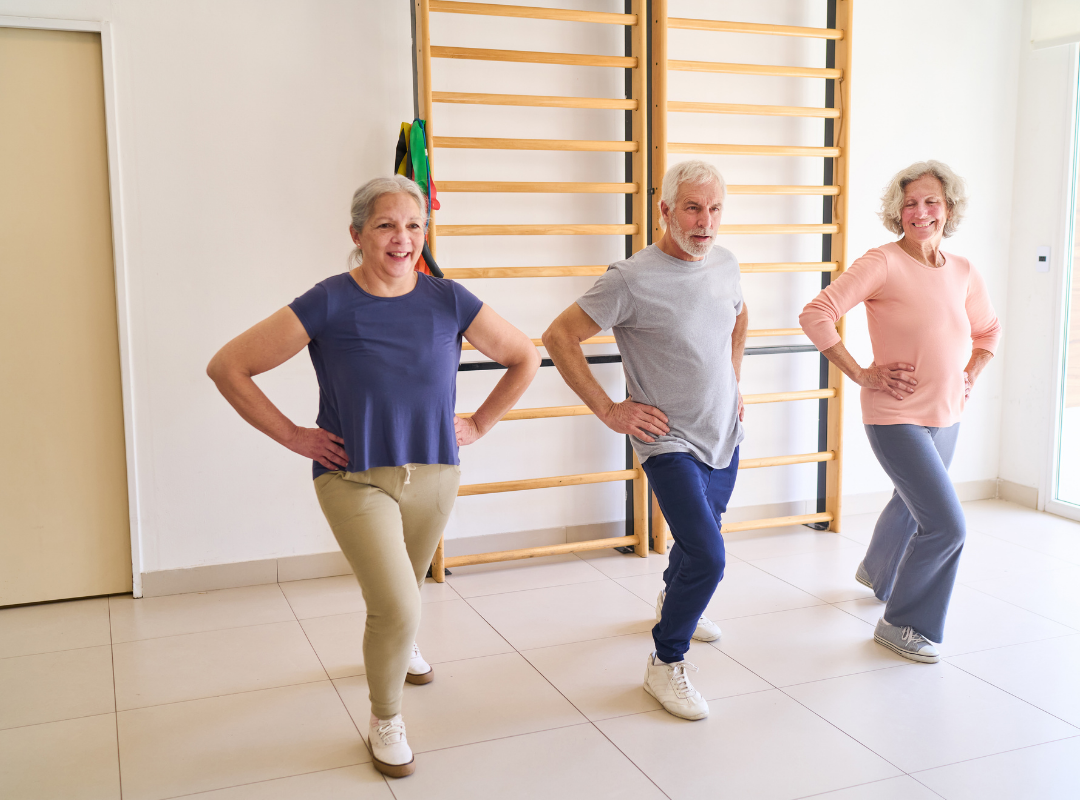
Balance and strength exercises for seniors combine controlled stability movements with exercises that strengthen the legs, hips, core, and upper body. Practicing both can support steadier movement, better posture, and greater confidence during daily activities such as standing from a chair, walking, turning, and changing direction.
The right starting point depends on your current comfort and mobility. Begin with stable support nearby, move at a comfortable pace, and speak with a healthcare professional if you have vertigo, pain, recent falls, or a major change in mobility. At The Gables of Canton, residents can participate in yoga and balance and strength fitness classes as part of an active community lifestyle.
How Balance and Strength Work Together
Balance is your ability to stay steady while standing or moving. Strength is your muscles’ ability to support and control that movement. Balance helps you control your position, while strength helps your body hold that position and respond when your weight shifts.
This connection matters during ordinary moments. Rising from a chair requires leg strength, posture, and control. Turning around requires balance and coordinated footwork. Stepping around furniture calls for side-to-side stability. Federal physical activity guidance recommends that older adults combine balance training with aerobic and muscle-strengthening activities as part of a well-rounded routine.
Five Senior Balance Exercises to Build Everyday Stability
The best senior balance exercises begin with enough support to help you move with control. Difficulty can be adjusted by changing your range of motion, number of repetitions, or level of support. Removing your support should never be the first goal.
Supported Weight Shifts
Stand behind a sturdy chair or beside a secure counter. Slowly shift your weight toward one foot, return to the center, and shift toward the other foot. Keep both feet on the floor until you feel steady and comfortable with the movement.
Sit-to-Stand
Sit near the front of a stable chair with your feet flat on the floor. Lean slightly forward and stand at a controlled pace, using the chair arms or another secure support if needed. Sit back down slowly instead of dropping into the seat.
Heel-to-Toe Standing or Walking
Place one foot directly in front of the other so the heel of the front foot is near the toes of the back foot. Begin by holding a counter or standing beside a wall. You can practice holding the position before trying to take slow steps.
Sideways Steps
Stand near a counter or wall and take a controlled step to one side. Bring the other foot toward it without crossing your legs. This movement can support the control needed when changing direction or moving around objects in your home.
Supported Single-Leg Stand
Hold a stable surface and lift one foot slightly from the floor. Keep your standing knee relaxed and your posture upright. This is a progression, so return to supported weight shifts if lifting one foot makes you feel unsafe.
There is no single number one balance exercise for every senior. Supported weight shifts are often a practical starting point because they let you practice controlling your body while keeping a chair, wall, or counter nearby.
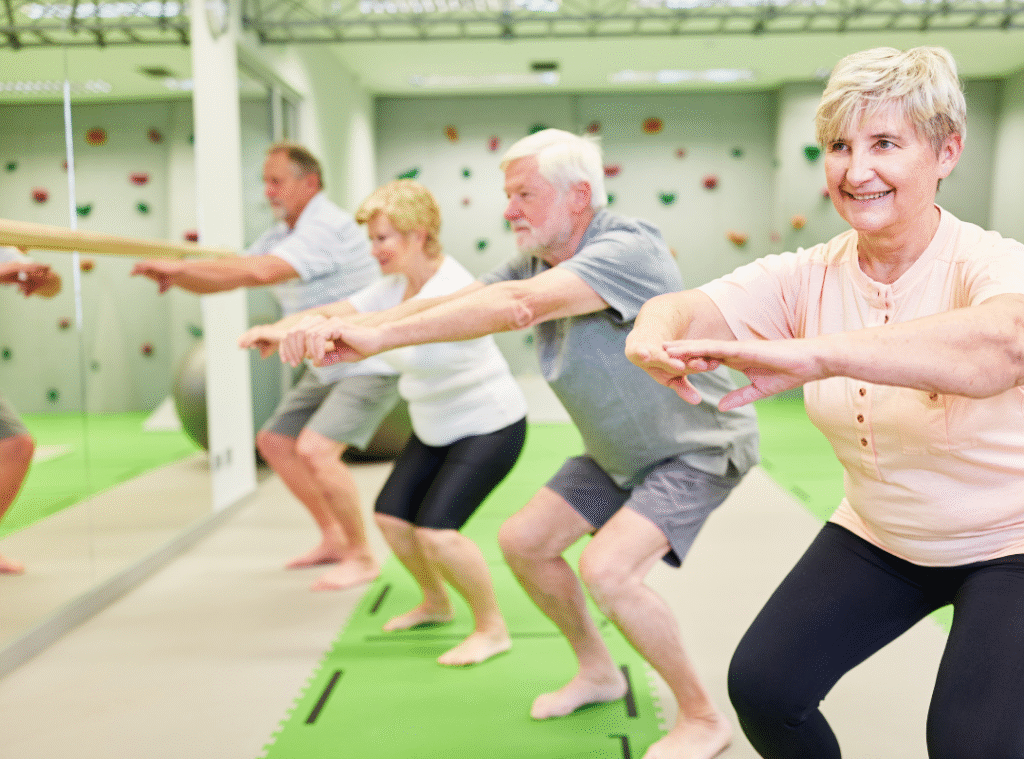
Strength Exercises That Support Balance and Daily Movement
Lower-body strength plays a central role in standing, walking, and recovering from small changes in footing. Upper-body and core strength also help you maintain posture and use supportive surfaces when needed.
Useful movements may include:
- Chair sit-to-stand for the thighs, hips, and controlled rising
- Supported calf raises for ankle control and walking
- Side leg raises for hip strength and side-to-side movement
- Seated knee extensions are an adaptable seated option
- Wall push-ups for upper-body strength and posture
To increase strength and balance in seniors, pair lower-body strengthening with controlled stability practice. A routine might combine sit-to-stand movements and calf raises with weight shifts, sideways steps, or supported single-leg standing. The Centers for Disease Control and Prevention recommends that adults age 65 and older include muscle-strengthening and balance activities each week, adjusted to their abilities and health conditions.
Balance Exercises vs. Strength Exercises vs. Yoga
Balance exercises, strength exercises, yoga, and walking serve different purposes, but they can work together. The best choice depends on what you want to improve and which movements feel appropriate for your current level of movement.
| Activity Type | Primary Focus | Everyday Relevance | Common Adaptation | May Help Support |
| Balance exercises | Steadiness and body control | Standing, turning, stepping, and changing direction | Chair, wall, or counter support | Controlled stability |
| Strength exercises | Muscle force and movement control | Rising, walking, reaching, and carrying | Seated versions or reduced range of motion | Everyday movement |
| Senior yoga | Balance, mobility, breathing, and body awareness | Posture, flexibility, and controlled transitions | Chair yoga or supported poses | Mindful, paced movement |
| Walking | Endurance and regular activity | Moving through your home or community | Shorter distances or added support | General mobility |
You do not need to choose only one. Strength can make balance movements easier to control. Balance practice can help you use that strength while changing position. Walking supports regular movement, while yoga may bring balance, mobility, posture, and breathing into the same activity.
Benefits of Yoga for Seniors Who Want Better Balance
The benefits of yoga for seniors may include improved balance, body awareness, posture, mobility, controlled breathing, and confidence with slow movement. The National Center for Complementary and Integrative Health notes that yoga may improve balance and increase strength when practiced regularly. Yoga asks you to notice how your weight shifts and how your body moves between positions, which can make it a useful complement to strength and balance practice.
Chair Yoga and Supported Yoga Options
Yoga does not always require getting onto the floor or holding a difficult pose. Chair-based and standing-supported movements can make yoga more approachable for people who need added stability or prefer to remain seated. The class should allow you to participate at your own pace without pressure to copy every movement.
What to Look for in Yoga Classes for Seniors
Look for yoga classes for seniors that provide clear instructions, stable supports, and appropriate modifications. A helpful class allows participants to remain seated when needed, gives them enough time to change positions, and encourages them to stop if a movement causes pain or feels unsafe.
A well-suited senior yoga class offers clear guidance, appropriate modifications, stable support, and enough time to move comfortably.
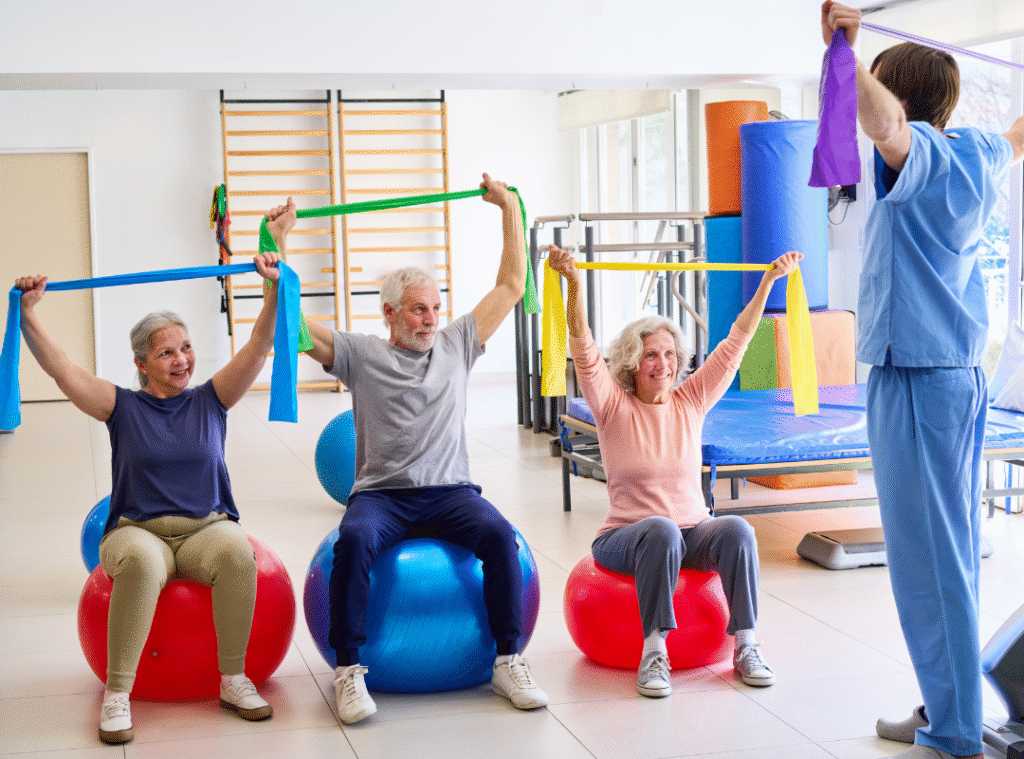
A Simple Balance and Strength Routine for Beginners
A beginner routine should be manageable enough to repeat consistently. You do not need a long or difficult session to start building a movement habit.
Try this simple sequence:
- Begin seated with gentle ankle movements.
- Practice a few controlled sit-to-stand movements using a stable chair.
- Perform supported weight shifts from side to side.
- Add slow calf raises while holding the chair.
- Take several controlled sideways steps near a wall or counter.
- Finish with comfortable seated or standing stretches.
Start with a small number of repetitions and rest between movements. Keep the focus on control, not speed. Family members can help by clearing the area, checking that the chair is stable, reducing distractions, and offering encouragement without pushing the person to do more than feels comfortable.
How to Make Senior Balance Exercises Safer
Senior balance exercises should challenge control without placing you in an unsafe situation. Use a sturdy chair or secure counter, wear footwear with reliable traction, and clear the exercise area of cords, loose rugs, clutter, and other tripping hazards.
The CDC reports that more than one in four adults age 65 and older falls each year. It also identifies lower-body weakness, walking and balance difficulties, unsuitable footwear, and home hazards as factors that may increase fall risk.
A few safety habits can make practice more comfortable:
- Avoid exercising beside stairs or unstable furniture.
- Move slowly when changing from sitting to standing.
- Do not close your eyes or remove support to make an exercise harder.
- Stop if you experience pain, sudden dizziness, unusual shortness of breath, chest discomfort, or new weakness.
- Seek individual guidance after a recent fall, injury, hospitalization, or major mobility change.
Balance practice is not a test of how long you can remain unsupported. A safer goal is to complete each movement with good control and enough support to feel secure.
Can Balance Exercises Help Vertigo?
Balance exercises may help some people improve general steadiness or confidence, but vertigo should not be self-treated with a basic senior exercise routine. Vertigo can have different causes, and the National Institute on Deafness and Other Communication Disorders explains that balance problems may be linked to conditions affecting the inner ear, brain, vision, skeletal system, medications, or blood pressure.
General unsteadiness, lightheadedness, and vertigo are not interchangeable. Someone who feels unstable while turning may have a different concern from someone who feels that the room is spinning. Speak with a qualified healthcare professional before trying exercises intended to address vertigo, especially if symptoms are new, severe, or recurring.
How Families Can Support Consistent, Enjoyable Movement
Consistency often depends on more than knowing which exercise is best. A senior may understand the value of movement but avoid it because the routine feels difficult, isolating, inconvenient, or poorly matched to their interests.
Families can evaluate an activity by asking four practical questions:
- Is it appropriate for the person’s current comfort and mobility?
- Can the movements be modified?
- Will the person enjoy participating regularly?
- Does the setting provide suitable support and encouragement?
Access also matters. Transportation, reminders, social connection, and help getting to an activity may affect participation as much as the exercise itself. You can use the Lifestyle Assessment to explore which interests, routines, and community features may fit your preferences or those of someone you care about.
Staying Active at The Gables of Canton
Balance and strength exercises work best when they fit naturally into your routine and match the support you need. At The Gables of Canton, residents have opportunities to participate in yoga classes and balance and strength fitness classes. Community amenities and activities also include escorts to activities and events, live entertainment, art classes, book club, outings, and interactive lectures and presentations.
The community offers Assisted Living, Memory Care, and Specialty Care, along with support such as dressing assistance, medication assistance, bathroom assistance, and on-site transportation. Families who are unsure which level of support may fit their situation can begin with the Care Assessment. To see how fitness, personal support, and daily activities come together, schedule a visit, contact the community, or call 330-484-5888 with your questions.
Frequently Asked Questions
What is the number one balance exercise for seniors?
There is no single best balance exercise for every senior. Supported weight shifts are often a useful place to begin because you can keep both feet on the floor and hold a stable surface. The movement teaches you to control your changing center of weight without immediately attempting a one-leg position. The right exercise should match your current comfort and mobility, and feel safe enough to practice consistently.
How do you increase strength and balance in seniors?
Combine lower-body strengthening with controlled balance practice. Sit-to-stand movements, calf raises, and side leg raises can support strength, while weight shifts and sideways steps focus more directly on stability. Begin with a stable chair or counter nearby and progress gradually. A healthcare or rehabilitation professional can provide individualized guidance when health conditions, pain, falls, or mobility changes are present.
Can balance exercises help with vertigo?
General balance exercises may support steadiness, but they are not a universal treatment for vertigo. Vertigo can have different causes, and exercises that are suitable for one person may not be suitable for another. A qualified healthcare professional can evaluate the symptoms and decide whether specific vestibular exercises are appropriate. Avoid attempting unfamiliar vertigo maneuvers without guidance.
What is the number one exercise for seniors?
There is no universal number one exercise for all seniors. A well-rounded routine often includes balance, strength, aerobic movement, and mobility work. The most useful activity is one that suits your abilities, supports your goals, and can be performed safely and regularly. Enjoyment and access also matter because an activity only helps when you can continue doing it.
How often should seniors practice balance exercises?
There is no single schedule that suits every senior. Frequency should reflect your health, current activity level, mobility, and any guidance from a healthcare professional. Short, consistent sessions may feel more manageable than occasional long sessions. Stop and seek guidance if an exercise causes pain, dizziness, or a new feeling of instability.